
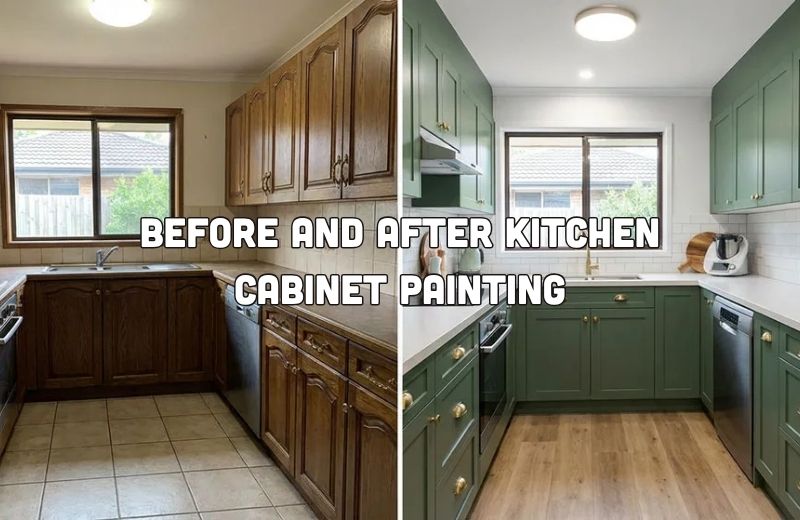
Before and After Kitchen Cabinet Painting: 5 Inspiring Transformations
Before & After Kitchen Cabinet Painting: 5 Colour Ideas for Melbourne Homes
Painting kitchen cabinets can make a big visual difference when the cabinets themselves are still worth keeping. The useful question is not simply “will white look newer?” It is whether the new cabinet colour works with the benchtop, splashback, flooring, hardware and natural light already in the room.
This guide looks at five before-and-after kitchen cabinet painting directions, what changes visually in each one, and what to check before choosing a similar colour for your own kitchen. For broader painting work, see VicPainter’s Melbourne painting services.
On This Page
- Should you paint the cabinets or keep the timber?
- When cabinet painting makes sense
- Five cabinet colour transformations
- Signs your cabinets are suitable for painting
- Why preparation changes the result
- Choosing cabinet colours around existing finishes
- Cabinet painting FAQs
Should You Paint Wood Cabinets or Keep Them Timber?
A useful before-and-after article should help with the decision, not assume that every timber kitchen needs paint. Some timber cabinets have attractive grain, a stain that still works with the room and a door profile worth keeping visible. Others are structurally sound but feel dated because the cabinet colour fights with the floor, benchtop or splashback.
That is one of the strongest ideas in the competitor article: each kitchen is judged in context. The cabinets are considered alongside the fixed finishes, budget and condition of the room rather than being treated as an isolated colour choice.
When Painting Kitchen Cabinets Makes Sense
Cabinet painting can be a practical alternative to replacement when the existing joinery is structurally sound and the kitchen layout already works. It can also reduce demolition and allow the project to focus on colour, finish and a few targeted updates such as hardware or lighting.
The benefit depends on the starting point. Painting does not fix warped doors, swollen board, failing laminate or a layout that no longer functions. In those cases, repair, refacing or replacement may be a better use of the renovation budget.
- Keep the cabinet boxes: useful when the layout and storage already suit the household.
- Change the visual weight: lighter colours can reduce the dominance of dark cabinetry, while deeper colours can add contrast to a pale kitchen.
- Coordinate existing finishes: the new colour can be chosen around the benchtop, splashback, floor and appliances you plan to keep.
- Limit disruption: repainting can involve less demolition than a full cabinet replacement, depending on the project.
For homeowners comparing a kitchen refresh with other interior work, the existing painters Hawthorn page remains linked here as in the original article.
5 Before & After Kitchen Cabinet Painting Ideas
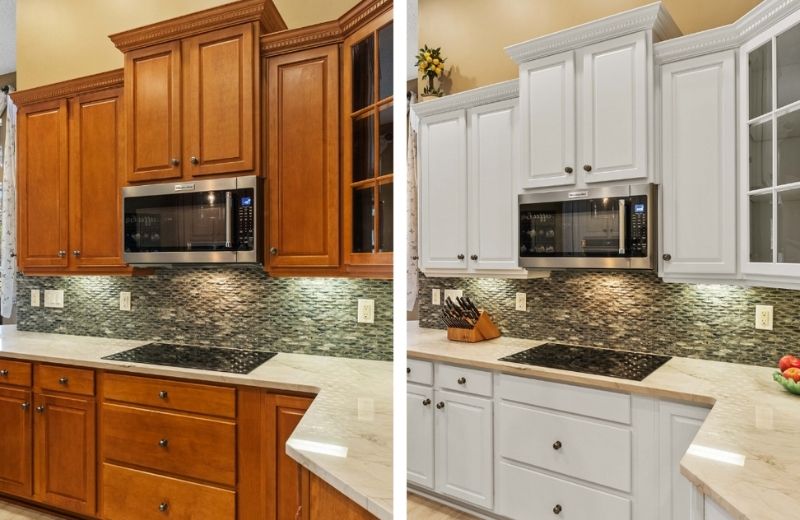
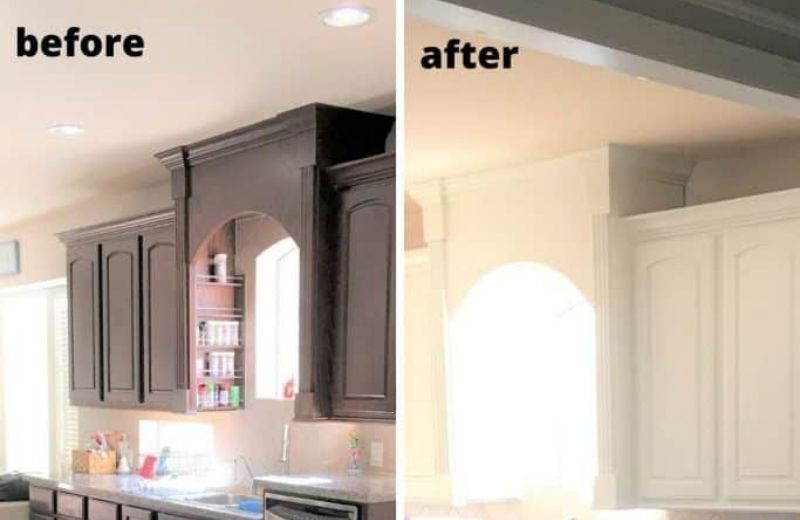
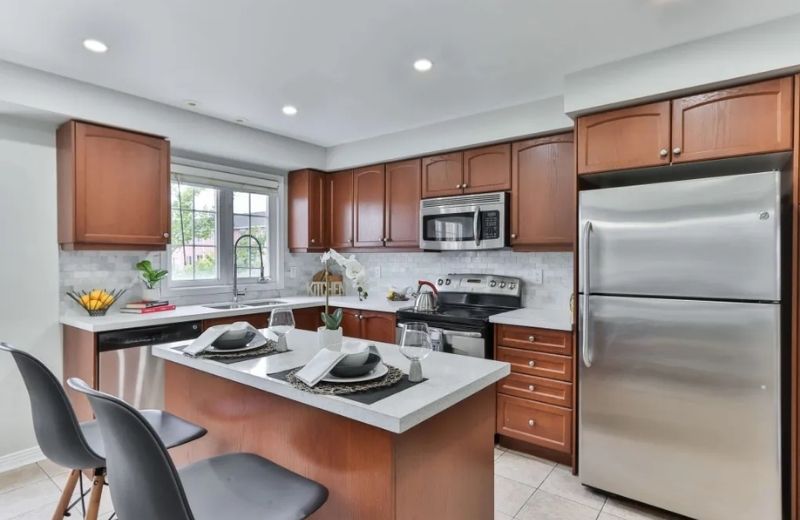
1. Dark Cherry or Deep Timber to Bright White
Deep red-brown cabinetry can carry a lot of visual weight, especially in a kitchen with limited daylight or other warm finishes. Moving to white can make the cabinet faces recede visually and reflect more light around the room.
What to check: pure white is not automatically the right white. If the benchtop, tile or flooring has warm beige or cream undertones, a softer off-white may connect with those finishes more naturally than a stark cool white.
2. Oak Cabinets to Warm White, Greige or Light Beige
Oak often has visible grain and yellow or orange undertones. If the timber is worth keeping, that character can be an asset. If the colour is the part making the room feel dated, a warm neutral can calm the palette while working with existing stone, tile and timber finishes.
What to check: compare colour samples directly against the benchtop and splashback. A greige that looks neutral on a sample card can pull noticeably pink, green or violet beside fixed kitchen materials.
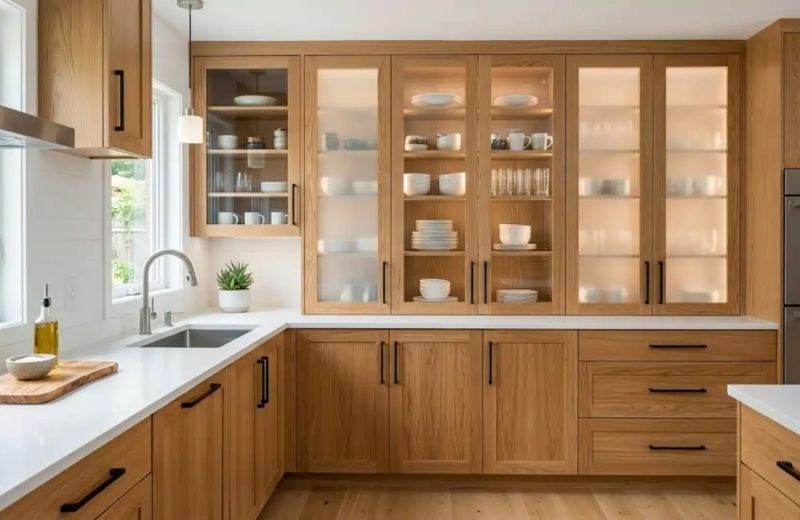
3. Honey Oak to Sage or Muted Green
Muted green is useful when a kitchen needs colour but you still want it to sit comfortably beside timber, stone and warm metals. Compared with honey oak, sage or green-grey cabinetry can reduce the overall orange-yellow cast of the room and introduce a softer contrast.
What to check: green undertones vary widely. Test the colour beside the flooring and benchtop in the actual room before choosing it for every cabinet door.
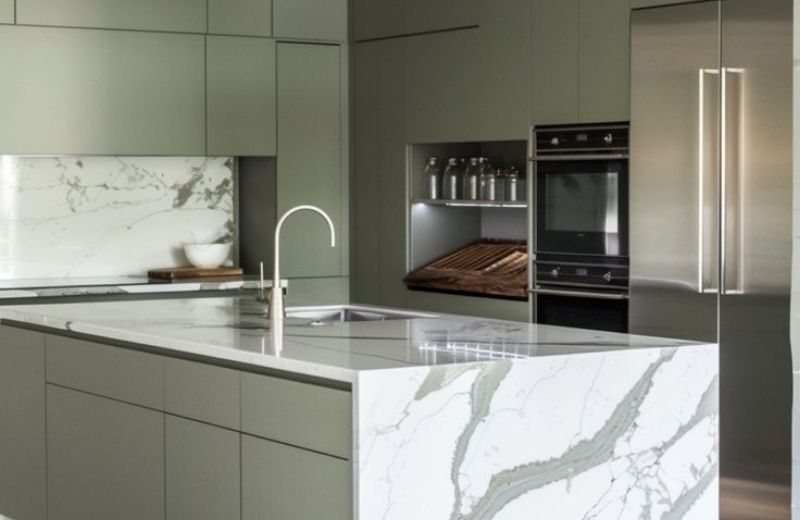
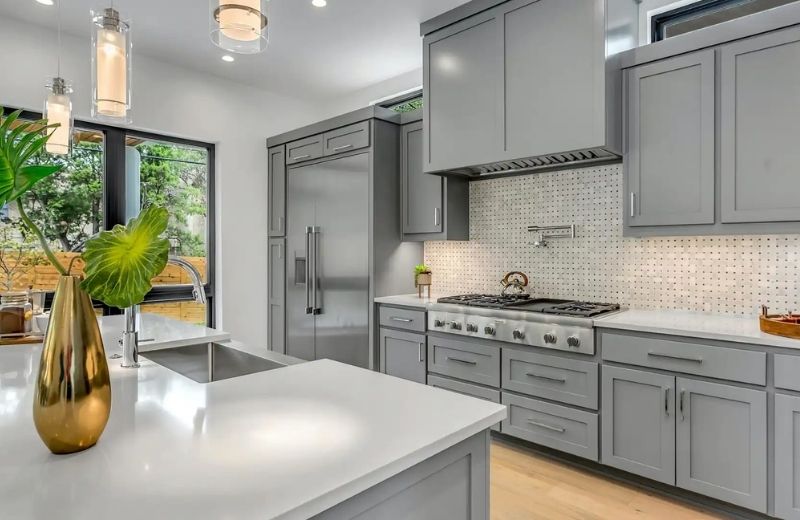
4. Traditional Timber to Soft Grey or Charcoal
Grey can work when the kitchen already contains cooler stone, stainless steel or neutral flooring. A lighter grey keeps the room restrained, while charcoal gives the cabinetry more contrast and can make pale benchtops stand out.
What to check: grey is heavily affected by surrounding colour. A grey that looks balanced in one kitchen can appear blue, green or violet in another, so the existing finishes matter more than the colour name.
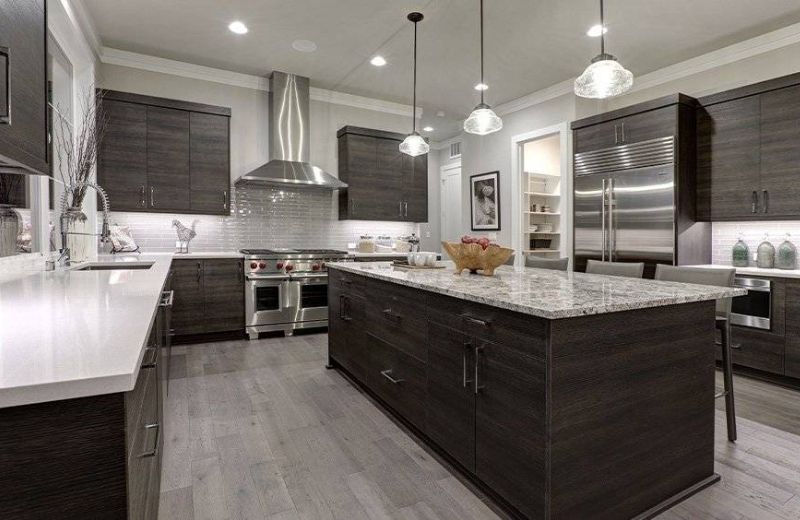
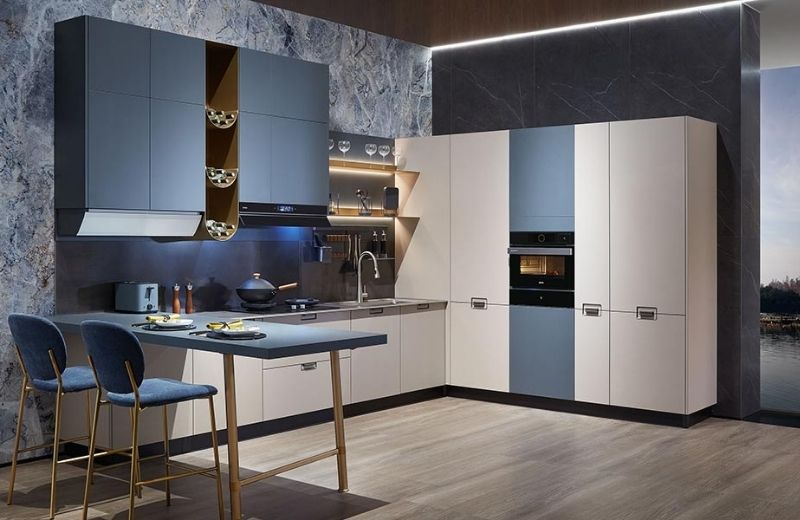
5. Two-Tone Cabinet Painting
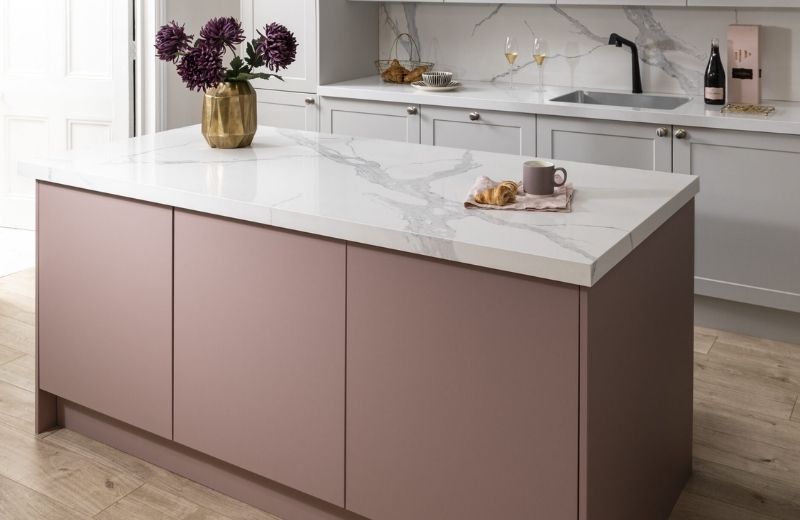
Two-tone kitchens use colour to separate areas instead of giving every cabinet the same visual weight. Common approaches include lighter upper cabinets with darker lowers, or one colour for the perimeter and another for the island.
What to check: two colours work best when there is a clear reason for the split. Use the architecture of the kitchen, an island or a natural break in the cabinetry rather than changing colour randomly from one door run to another.
Signs Your Cabinets Are Good Candidates for Painting
The original article had the right idea here but repeated broad claims such as “completely refresh” and “highest visual impact”. A more useful test is the condition of the cabinetry itself.
- The boxes and doors are structurally sound. Hinges work, doors close properly and the substrate is not badly swollen or warped.
- The layout still works. You are happy with the storage and cabinet positions and mainly want a visual update.
- The existing finish can be prepared. Wear, scratches and minor chips may be repairable, while widespread delamination or substrate failure needs a different solution.
- The cabinet colour is the main issue. If the surrounding finishes still work, a cabinet colour change can be enough to rebalance the room.
- You are preparing the home for presentation or sale. Painting can improve the appearance of a dated but functional kitchen, although buyer preferences and resale value are never guaranteed.
Why Preparation Matters More Than Marketing Claims
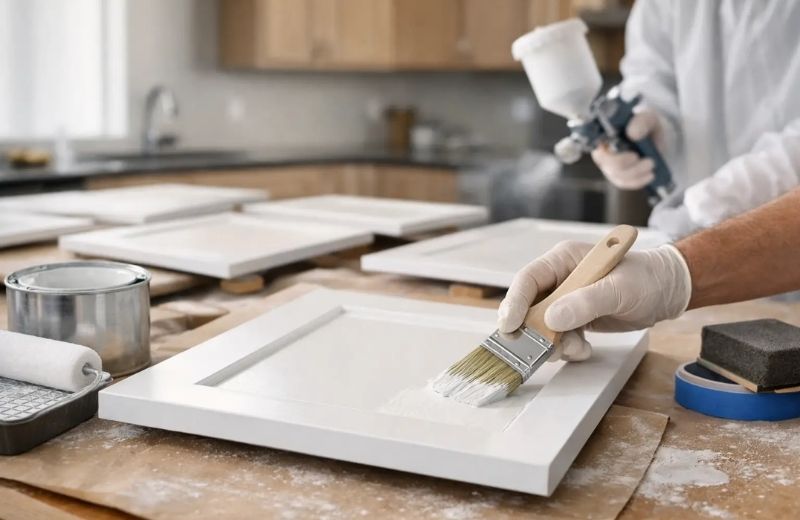
The weakest language in the old version was the repeated use of phrases such as “factory-quality”, “premium”, “excellent adhesion” and “long-term durability” without explaining the work behind them. For cabinet painting, the practical stages are more useful: clean the surfaces, remove grease, sand or degloss as required, repair defects, use a compatible primer and apply a cabinet-suitable coating.
Preparation also changes how visible the old surface remains. Wood grain, damaged edges, deep scratches and previous coating defects can show through a new colour if they are not dealt with properly. A smooth result therefore starts well before the finish coat.
Popular Cabinet Colour Directions to Consider
Instead of treating one colour as universally “best”, compare it with the materials already fixed in the room. Flooring, benchtops, splashbacks and natural light can all change how the same paint colour appears.
Before & After Cabinet Painting FAQs
Will painting wood cabinets always make a kitchen look better?
No. Some timber cabinets are worth keeping as they are. Painting is most useful when the existing stain, wear or colour is the part that no longer works with the room, while the cabinetry itself is still sound.
Should I choose white cabinets for a darker kitchen?
A lighter colour can brighten the overall palette, but the specific white should still work with the benchtop, splashback, floor and wall colour. Warm kitchens often need a softer white rather than the brightest white available.
Can oak grain still show after painting?
Yes. Oak has a pronounced grain, and the amount that remains visible depends on the timber, preparation method and finish system. If a completely flat surface is the goal, discuss that expectation before the project starts.
Is two-tone cabinet painting suitable for every kitchen?
No. It works best when the layout provides a natural place to change colour, such as an island or a clear split between upper and lower cabinetry. In a small or visually busy kitchen, one cabinet colour can be calmer.
What should I compare when looking at before-and-after photos?
Look beyond the cabinet colour. Check whether the benchtop, backsplash, flooring, hardware, lighting or wall colour also changed. Those details can contribute significantly to the final result.
Planning a Cabinet Colour Update?
Use these examples to narrow the direction, then compare your preferred colour against the actual benchtop, splashback, floor and lighting in your kitchen. VicPainter can also discuss the broader painting scope for Melbourne homes.
VicPainter Contact Details
- Address: 71 Rochester Road, Balwyn, VIC 3103
- Hotline: 0401 851 598
- Email: admin@vicpainter.com
- Website: www.vicpainter.com
- Facebook: facebook.com/fencepaintingmelbourne/
- Instagram: instagram.com/vicpainter_painters_melbourne/
